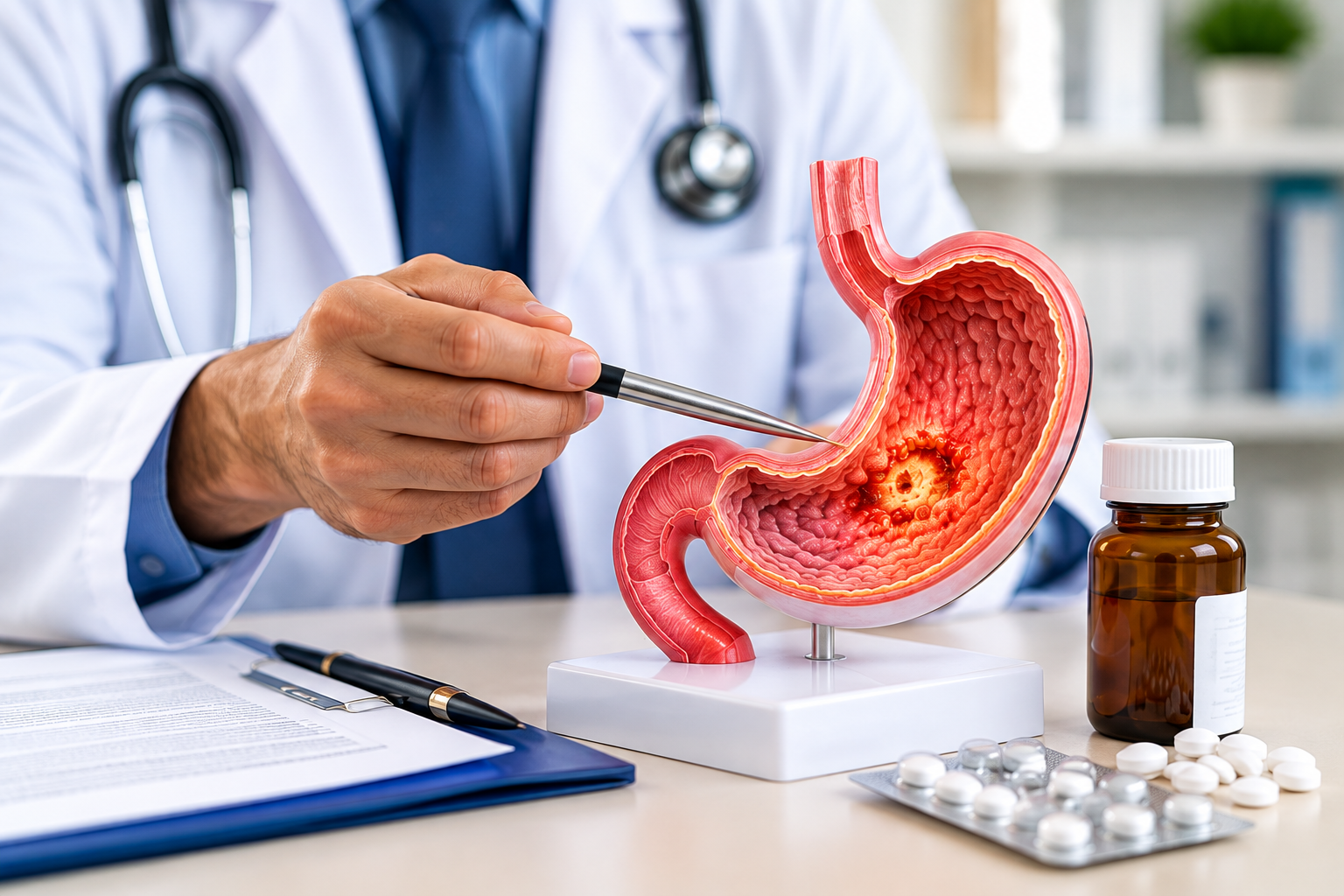
The Link Between Gastric Ulcers and Stomach Cancer
The strongest link between gastric ulcers and stomach cancer is a spiral-shaped bacterium called Helicobacter pylori, or H. pylori. You will learn more about this link as you read through the write-up.
There’s a common belief among patients that gastric ulcers eventually become stomach cancer. The fact is that not all gastric ulcers become cancer in the long run. Patients remain at risk of this deadly transformation under certain circumstances. For example, H. pylori infection, chronic or untreated ulcers (which may or may not be caused by H. pylori), chronic inflammation, and certain dietary habits and lifestyles. Read on to learn more.
H. pylori and Its Link with Gastric Ulcer and Stomach Cancer
According to recent reports, H. pylori infection causes around 60 to 80% of gastric ulcers. The bacterium is also the number one cause of chronic gastritis, a condition characterised by an inflamed stomach lining.
Most people infected with this bacterium do not experience any symptoms. Patients are typically diagnosed with H. pylori infection only when they have an ulcer. That’s because ulcers are rarely asymptomatic. The most common sign of gastric ulcer of this type is significant abdominal discomfort. Here are some common features of this discomfort:
- The discomfort starts bothering two to three hours after eating
- It gradually reduces once the patient eats something
- It often occurs when your stomach becomes empty in the middle of the night
- The discomfort is accompanied by a dull pain
- The pain and discomfort tend to come and go, and the flare-ups last for days or even weeks
- Antacids offer temporary relief from the discomfort
When your gastric ulcer is triggered by an H. pylori infection, you may also experience the following symptoms:
- A burning stomachache that goes away temporarily after eating
- Nausea and vomiting
- Frequent flatulence or burping
- Bloating almost throughout the day
- Decreased appetite followed by weight loss without trying
Researchers are yet to confirm how patients get infected with H. pylori. They believe that one gets exposed to the bacterium either through water or food. Multiple studies have, however, confirmed that many infected individuals have H. pylori in their saliva, stool, and/or vomit. This means there are chances the bacteria spread from one individual to another when kissing, using contaminated toilet seats, etc.
The bacterium damages the gel-like protective mucous coating of the duodenum and stomach. This change allows stomach acid to reach the extremely sensitive lining underneath the mucous coating. During the initial phase, irritation caused by H. pylori and the acid leads to chronic gastritis. Ongoing irritation eventually triggers ulcer or open sore formation in the lining.
Over time, the inflammation destroys the stomach glands and replaces them with fibrous scar tissue. This causes metaplasia, or a change in cell shape and dysplasia or the production of abnormal cells. Stomach cancer due to H. pylori occurs when these mutated cells start growing uncontrollably. The most common forms of stomach cancer linked with H. pylori are gastric MALT lymphoma and gastric adenocarcinoma.
The good news is that stomach cancer due to H. pylori is highly preventable. Your chances of getting this cancer will decrease significantly if you undergo proper treatment for the bacterial infection.
If you are wondering whether the regular episodes of gas, nausea, and bloating you experience are due to an H. pylori infection, visit reopine.com, the most trusted platform offering virtual medical consultations. Reopine has a panel of India’s most experienced gastroenterologists. An appointment with one of them is all you need to find out whether you have an H. pylori infection and get the most effective treatment.
Other Links Between Gastric Ulcer and Stomach Cancer
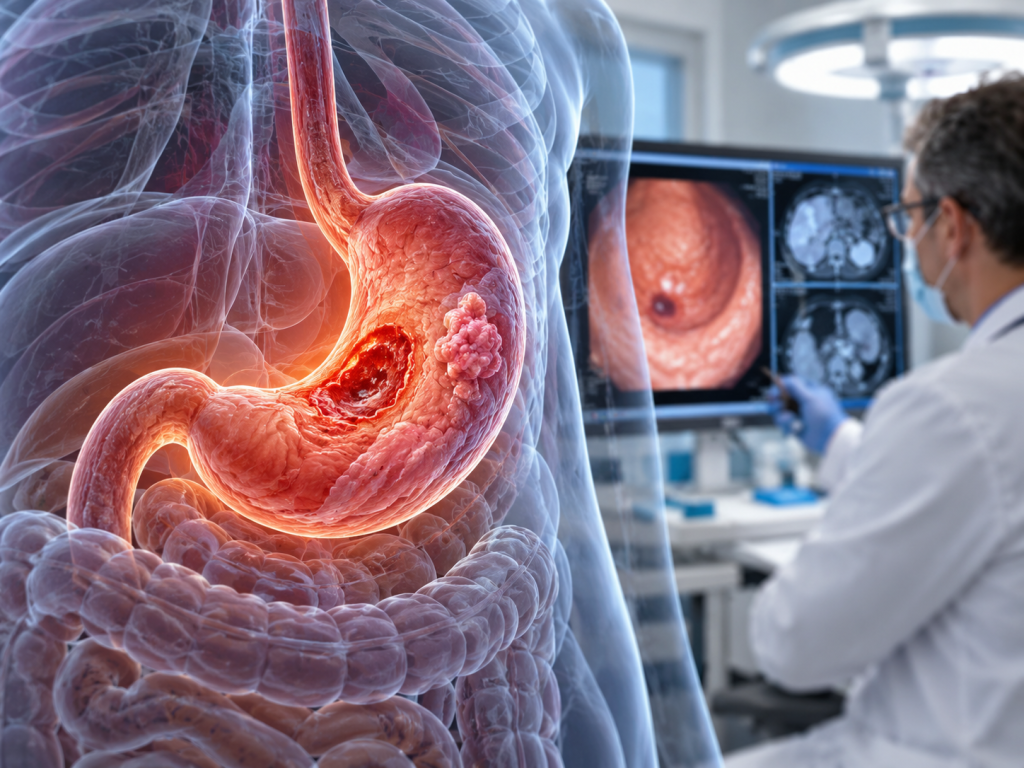
Here are some other factors that may be responsible for causing gastric ulcers that eventually transform into stomach cancer:
Atrophic gastritis: Patients with atrophic gastritis have chronic inflammation in their stomach lining. It leads to shrinking and eventual disappearance of normal cells. According to medical experts, this is a precancerous condition.
Intestinal Metaplasia: When you have a gastric ulcer, your stomach lining is damaged. This happens irrespective of the factor responsible for causing the cancer. On rare occasions, tissue mimicking the shape and size of those forming the intestine replaces the damaged stomach lining. Doctors tag this state as precancerous.
Alcohol and Tobacco: Habits like smoking, tobacco chewing, and alcohol abuse trigger excess stomach acid production and intense cellular irritation. If you have one or more of these habits, you are at high risk of getting gastric ulcers and experiencing cancerous mutations.
Dietary Habits: Individuals who consume too much salt or have meals containing an excessive amount of pickled or smoked food remain at greater risk of having gastric ulcers and stomach cancer.
You can prevent both gastric ulcers and stomach cancer by undergoing regular medical checkups. These checkups also enable early detection of stomach cancer, which significantly increases the chances of complete cure.