
What Are the Main Causes of Blood Cancer, and Is It Curable in the First Stage?
Blood cancer can sound frightening. And once someone hears the diagnosis, questions usually come quickly. Why did this happen? Was there something that caused it? Most importantly, can it be cured if doctors find it early?
There is no single answer.
Blood cancer is actually a group of cancers. The main types are leukaemia, lymphoma and multiple myeloma. They affect blood cells, bone marrow or the lymphatic system in different ways. Some develop slowly. Others can progress much faster.
What Causes Blood Cancer?
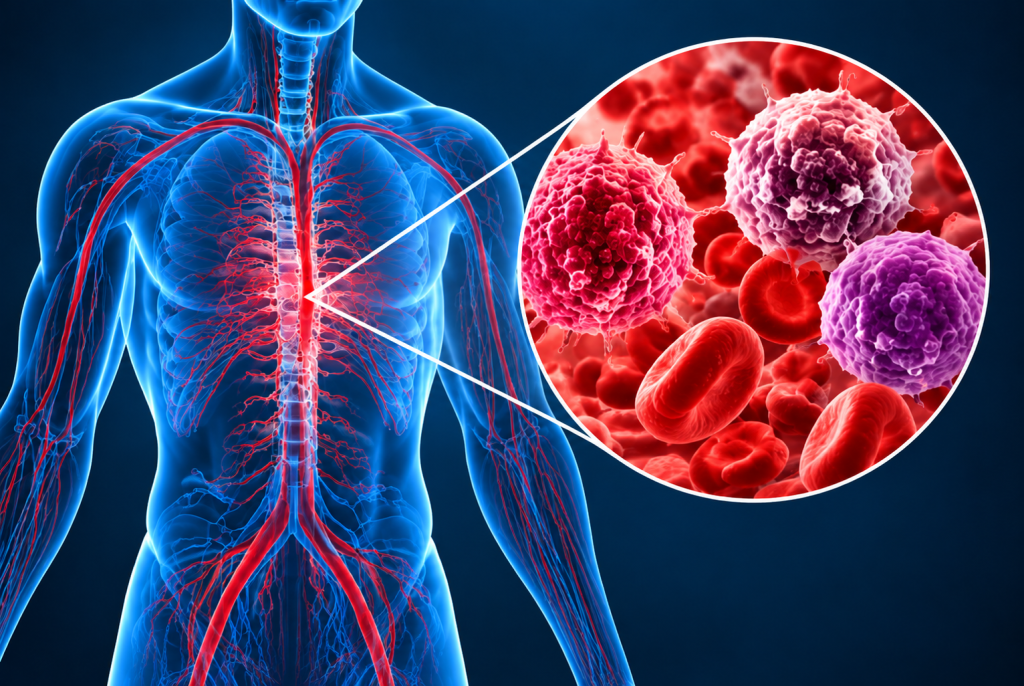
Blood cancer usually starts when something goes wrong inside certain blood cells. Changes occur in their DNA, causing the cells to behave differently. Instead of growing, working and dying normally, abnormal cells may continue multiplying.
But why do those changes happen? In many cases, doctors simply cannot point to one exact reason.
Still, researchers have identified a few factors that may increase a person’s risk.
1. Changes in Genes
Certain genetic changes can increase the chance of developing some blood cancers. A few inherited conditions are also linked with a higher risk of leukaemia.
For example, people with Down syndrome have a higher risk of certain types of leukaemia. This does not mean they will definitely develop blood cancer. It only means the risk is higher.
2. High Levels of Radiation
Exposure to very high levels of radiation can damage cells in the body. In some situations, this may increase the risk of leukaemia later in life.
People who previously received radiation therapy for another cancer may also have a slightly higher risk. However, the level of risk varies from person to person.
3. Exposure to Certain Chemicals
Some chemicals have been linked with blood cancer. Benzene is one of the better-known examples.
It is used or found in some industrial environments and is also present in cigarette smoke and petrol. High or long-term exposure to benzene may increase the risk of certain types of leukaemia.
4. Previous Cancer Treatment
Cancer treatment saves lives, but certain treatments can carry long-term risks.
Some chemotherapy medicines and radiation treatments may slightly increase the chance of developing another cancer years later. This is uncommon, and the risk depends on the treatment received.
5. A Weak Immune System and Some Infections
The immune system normally helps protect the body. When it becomes severely weakened, the risk of certain lymphomas may rise.
Some infections are also associated with particular blood cancers. These include HIV, Epstein-Barr virus and HTLV-1.
Again, having one of these infections does not automatically mean a person will get blood cancer.
6. Age
Age can matter too.
Some blood cancers are more common among older adults. Acute myeloid leukaemia, for instance, occurs more often as people get older. But blood cancer is not limited to older people. Children and younger adults can develop certain forms as well.
Is Blood Cancer Curable in the First Stage?
This question is a little more complicated than it sounds.
Not every blood cancer has a “first stage.” Some lymphomas and multiple myeloma use staging systems, but many leukaemias are classified differently.
Still, finding blood cancer early can help doctors understand the disease and begin suitable treatment sooner.
Some blood cancers respond very well to treatment. Hodgkin lymphoma, for example, is considered highly treatable, including in its early stages. Other blood cancers may be controlled for a long time rather than completely cured.
Treatment also varies. A patient may need chemotherapy, targeted medicines, immunotherapy, radiation therapy or a stem cell transplant. Sometimes, a combination is used.
The exact outlook depends on the type of cancer, its features, the person’s age, overall health and how well the cancer responds to treatment.
Get Expert Guidance for Blood Cancer
If you or a loved one has been diagnosed with blood cancer or is concerned about symptoms, getting guidance from an experienced specialist can help you understand the diagnosis and available treatment options. Reopine connects you with experienced oncologists in India for online consultations, second opinions and personalised medical guidance. You can securely share your medical reports and discuss your condition with a specialist from the comfort of your home. Consult an Oncologist Online with Reopine
Final Thoughts
Blood cancer does not always come with a clear reason. Genetic changes, radiation, chemical exposure, previous cancer treatment, certain infections and age can raise the risk. Yet some people develop the disease without any known risk factor.
And is it curable when caught early? Sometimes, yes. But it depends heavily on the type of blood cancer. Early medical evaluation, correct diagnosis and the right treatment can make an important difference.