

Kidney Cancer: Types, Symptoms, Diagnosis and Misdiagnosis
Kidney cancer is a form of cancer that triggers the growth of abnormal cells in the kidneys. You will learn more about the condition, its symptoms, and types as you read through the section below:
Kidney Cancer Types
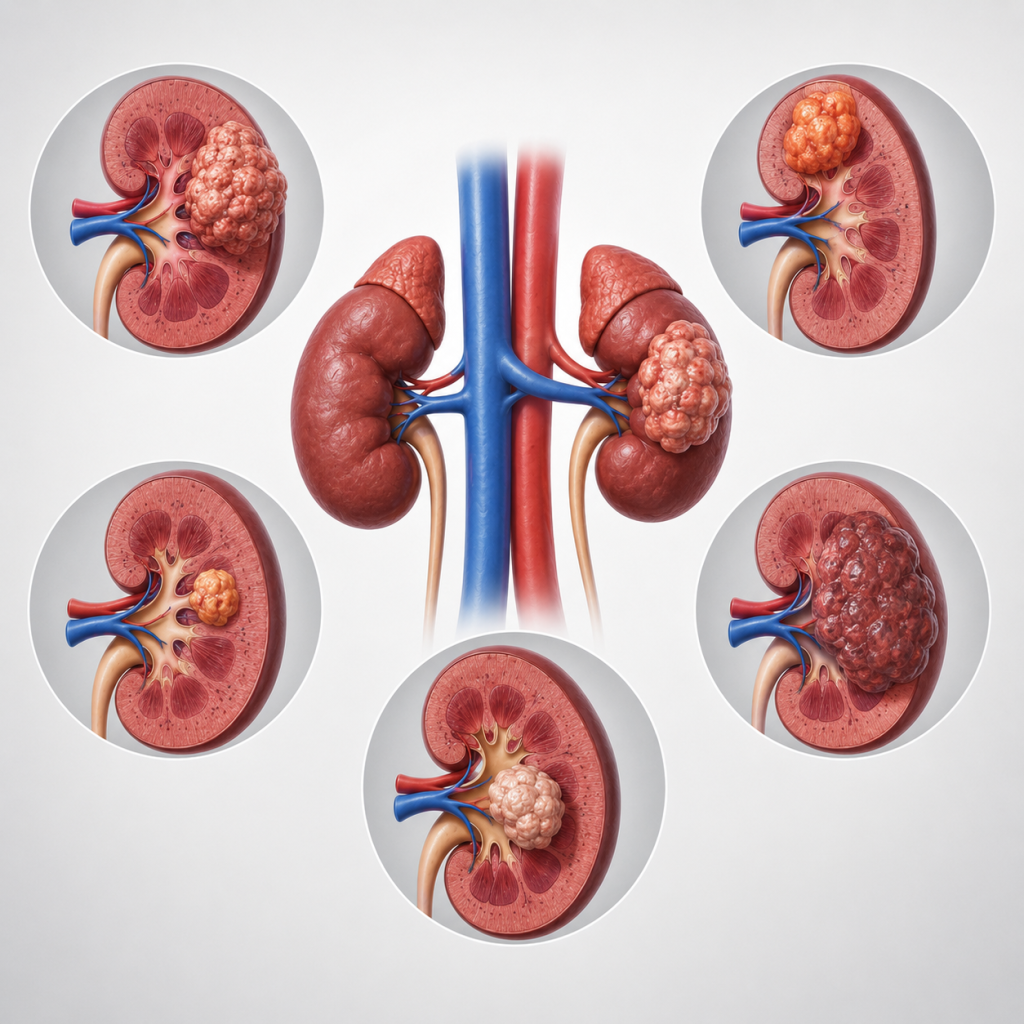
Renal Cell Carcinoma: Most people with kidney cancer (around 9 out of 10, to be precise) have this form of the disease. RCC has multiple subtypes; they are:
- Clear Cell RCC: This subtype constitutes 8 out of 10 cases of RCC. Microscopic view of the cells affected by clear cell RCC shows them as clear or extremely pale.
- Papillary RCC: Papillary RCC constitutes around 10-15% of all cases of RCC. Most tumours of this type tend to have finger-like projections, which doctors refer to as papillae, hence the name.
- Chromophobe RCC: Around 5% of confirmed cases of RCC are of this subtype. Like clear cell RCC, chromophobe RCC is also characterised by pale cancer cells. However, in the case of this subtype, the cells are significantly larger and have some distinguishable features.
- Collecting Duct RCC: It is an extremely rare condition and is characterised by cancer cells that form irregular tubes.
- Unclassified RCC: This subtype gets its name from the fact that, despite being a form of RCC, it doesn’t have any similarity with any of the above subtypes when it comes to the appearance of cells. Patients diagnosed with unclassified RCC have tumours carrying more than one type of cancerous cells.
Transitional Cell Carcinomas: Approximately 5 to 10% of patients with kidney cancer have transitional cell carcinoma. Medical professionals also refer to this kidney cancer type as urothelial carcinoma. The other term used for this cancer type is renal pelvis carcinoma. The disease gets this name from the fact that it begins in the patient’s renal pelvis, i.e., the kidney’s central urine-collection part.
When an individual has transitional cell carcinoma, he/she has cancer cells that look like bladder cancer cells during microscopic evaluation.
Statistics suggest that transitional cell carcinoma is more common among smokers and people who are constantly exposed to specific cancer-causing chemicals. Men (especially those above 65) are more likely to get this cancer than women.
The good news is that when detected in an early stage, 9 out of 10 patients suffering from this kidney cancer type get cured.
Wilms Tumour: Wilms tumour, which is also often referred to as nephroblastoma, is a rare condition that primarily affects children under the age of five years. These cancerous tumours typically form in just one kidney.
Renal Sarcoma: Renal sarcoma is an extremely rare form of kidney cancer. It constitutes only 1% of primary malignant tumours found in the kidneys. However, as it is an extremely aggressive cancer, it’s a common subject of multiple medical studies. Renal sarcoma starts from the smooth muscles, blood vessels, or connective tissues of the kidney.
Common Symptoms of Kidney Cancer
Here are some symptoms that indicate the presence of kidney cancer. You should book an appointment with a trusted nephrologist or oncologist if you notice any one of them:
- Blood in urine is the most common sign of the disease. You may see blood in your urine intermittently or whenever you pee; both are causes of equal concern.
- The next most common symptom of the disease is back pain. Back pain resulting from kidney cancer tends to occur on the sides (between your ribs) and/or on the hips.
- Consider seeing a nephrologist/oncologist if you are bothered by low energy, unexplained fatigue, and daytime drowsiness.
- If you lose a significant amount of body weight without trying, getting yourself checked for kidney cancer would be wise.
- If you notice or feel the presence of a lump around your lower back or on the side, it can be a sign of kidney cancer.
- Some kidney cancer patients have low-grade fever coupled with night sweats despite not having any infection.
How Is Kidney Cancer Diagnosed?
When you visit an oncologist or nephrologist for kidney cancer diagnosis, he/she will first listen to your symptoms, carry out a thorough physical examination, and prescribe a series of diagnostic tests.
First, you will need to get some bloodwork done. It will be followed by a urine culture and urine routine examination. Then, you will have to undergo imaging tests such as an MRI or CT scan. Doctors prescribe these tests to spot the exact location of the cancerous tumours and determine their size.
Once the imaging tests confirm the presence of tumours, your doctor will ask you to get a biopsy done. Biopsy in kidney cancer patients involves inserting a needle into the tumour and removing a tissue sample for testing.
You may not need to get the biopsy even when the imaging test confirms the presence of tumours if your oncologist decides to surgically remove the tumours before applying chemotherapy or radiation. An initial biopsy is also not required if the imaging tests reveal enough information about the tumours.
The imaging tests and biopsy are primarily required for accurate staging and grading of kidney cancer.
Beware of Misdiagnosis
Misdiagnosis is a common cause of death due to kidney cancer as it delays treatment and makes it less effective. As the above-mentioned symptoms of kidney cancer are also common in patients with kidney cysts, kidney infections, urinary tract infections, bladder infection and renal infarction, doctors often fail to identify the presence of kidney cancer when the disease is in its early stage. This makes getting a second opinion extremely crucial. One platform you can trust when in need of a second opinion on kidney cancer diagnosis is Reopine. Depending on your preference, you can book an appointment with an oncologist or nephrologist through this amazing platform. The best thing about Reopine is that it will let you meet some of the most revered nephrologists and oncologists in India for virtual consultation.