

What Is The Difference Between IVF And a Test Tube Baby?
Most of the people think IVF and “test tube baby” are two different types of fertility treatment. However, they are literally the same process. The main source of confusion is the vernacular used over the years. The medical word is “IVF,” and the common term that we are more familiar with is “test tube baby.” The role of understanding the key difference between IVF and test tube baby will help couples opt for fertility treatment without any confusion or fear.
What Is IVF?
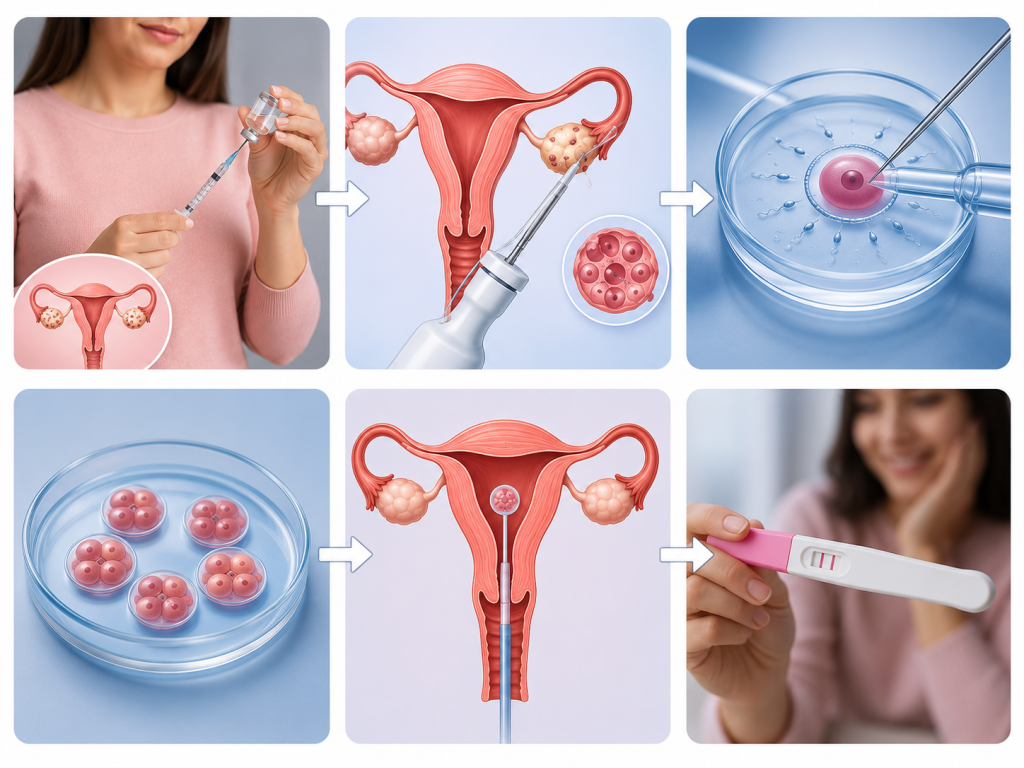
It is Verifiably Testing Integer fertility (IVF). The egg and sperm were fertilised outside of the human body in a lab; it is an advanced fertility treatment. After fertilisation, the embryo is implanted in the woman’s womb to be housed and develop naturally.
The IVF process generally includes:
- Ovarian stimulation using fertility medications
- Egg retrieval from the ovaries
- Collection of sperm samples
- Fertilisation in a laboratory dish
- Embryo development and monitoring
- Embryo transfer into the uterus
IVF is advised in cases related to infertility problems such as blocked fallopian tubes, ovulation disorders, low sperm count and endometriosis or unexplained factors behind it.
What Is a Test Tube Baby?
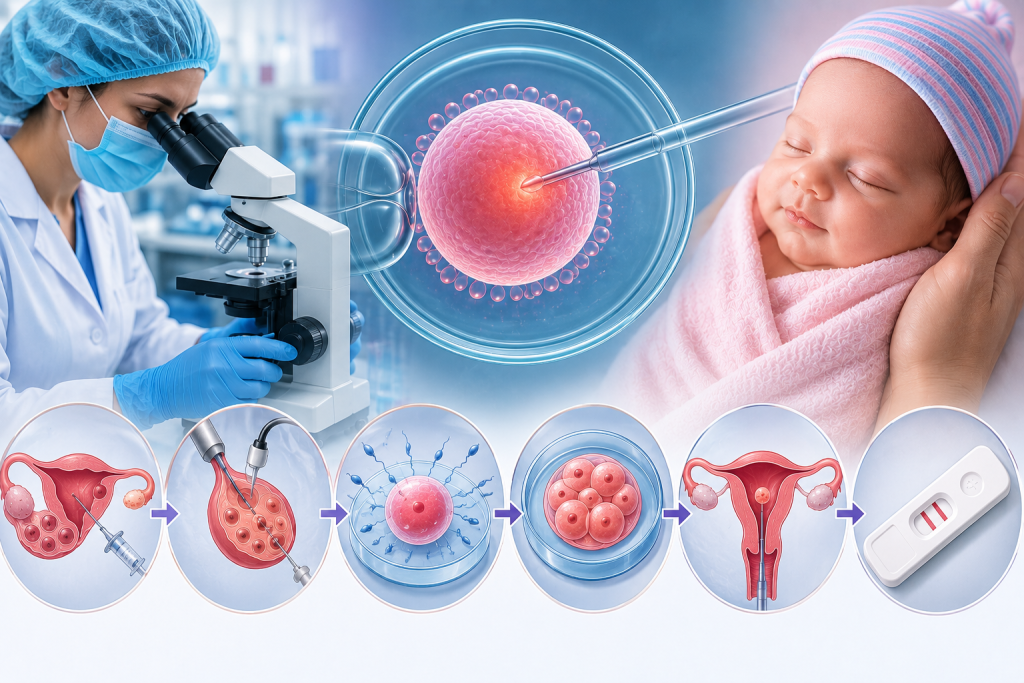
A “test tube infant” is just an unborn child conceived by means of IVF treatment. People started using this term after 1978 when the world’s first IVF baby, Louise Brown, was born. The phrase caught on because people thought the baby was made in a test tube.
But there is no actual test tube at any point in the process. Fertilisation normally takes place in a specially made lab culture dish, also known as a Petri dish. After transfer, the embryo develops naturally within the mother’s womb.
Is There Any Difference Between IVF and Test Tube Baby?
In the medical field, there is no technical difference between the current IVF (test tube baby). IVF is the formal or scientific name for this treatment, and “test-tube baby” is rather informal, layperson’s terminology.
Here is a simple comparison:
| IVF | Test Tube Baby |
| Medical term | Common public term |
| Refers to the fertility procedure | Refers to the baby born through IVF |
| Used by doctors and fertility specialists | Commonly used in conversations |
| Scientifically accurate | Informal terminology |
How Does IVF Actually Work?
The IVF process removes many myths and reasons of misunderstanding about test tube baby.
Step 1: Ovarian Stimulation
Hormone injections are given to the ovaries by doctors to produce multiple eggs instead of one.
Step 2: Egg Retrieval
When the eggs are ready, they undergo a minor medical procedure to remove them.
Step 3: Fertilisation
In a dish, the eggs and sperm come together to form embryos.
Step 4: Embryo Development
They wait a few days, watching for signs of natural growth in the embryos.
Step 5: Embryo Transfer
Transfer of a healthy embryo into the uterus for implantation and pregnancy.
From this point, the pregnancy progresses normally, like any other.
Common Myths About IVF and Test Tube Babies
Myth 1: IVF Babies Are Different
IVF babies are identical to a naturally conceived baby in body and genetics. The matter of this is just where fertilisation happens.
Myth 2: Babies Grow in a Test Tube
The embryo grows in a tube outside the body for just a short time. After that, the baby grows naturally within the belly.
Myth 3: IVF Always Guarantees Pregnancy
IVF does increase the likelihood of conception, but success is dependent on factors such as age, egg quality and sperm health.
When Should Couples Consider IVF?
IVF takes place in case a couple has
- Difficulties in conceiving after having 1 year of unsuccessful attempts
- Repeated miscarriages
- Blocked fallopian tubes
- Severe male infertility
- Endometriosis
- Ovulation disorders
- Age-related fertility decline
Modern IVF technology has been helping couples worldwide to become parents for a few million, though not necessarily up to now by the grace of god.
When couples find themselves struggling to conceive, they require the right medical advice, emotional support and a reliable treatment. At Reopine, you can discover advanced healthcare services and medical support from experts to improve your treatment experience. Reopine provides you with the kind of trustworthy healthcare assistance that can help guide your journey toward parenthood, whether it is fertility care, women’s health services, or specialist consultations for those seeking more specific options.
Final Thoughts
As such, the shift is in wording itself than it is comparison of treatment to Test tube baby vs IVF. IVF is a medical process and a test tube baby simply means that it is an informal name given to babies conceived by IVF. These two terms mean the same treatment which have given hope and happiness to millions of families across the globe.