
Understanding Air Quality Index (AQI) & Its Impact on Respiratory Health !
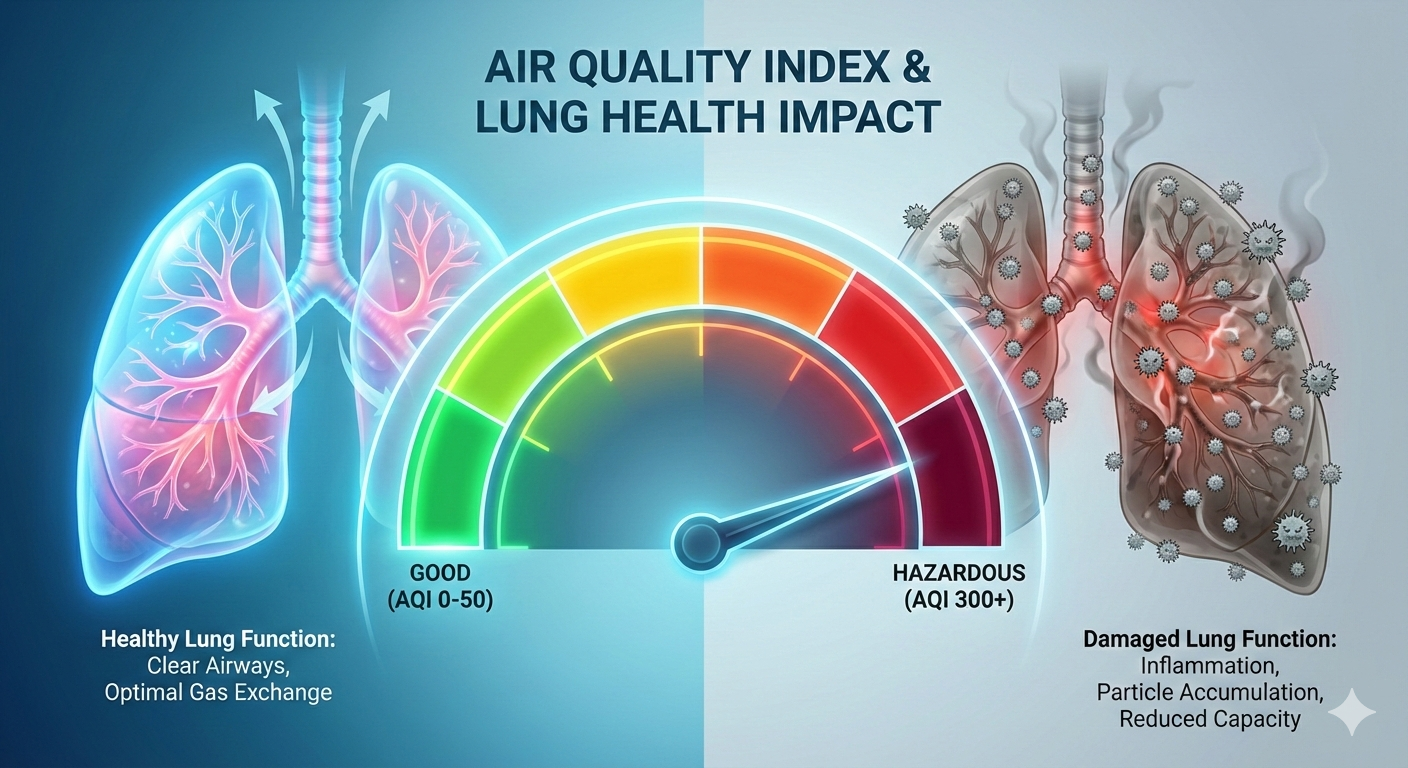
Introduction: What is the Air Quality Index?
Air pollution has become one of the most pressing public
health challenges globally, and understanding how to measure and interpret
pollution levels is critical for protecting your respiratory health. The Air
Quality Index (AQI) is a standardized numerical scale developed by
environmental and health agencies worldwide to quantify air pollution and
communicate potential health risks to the general population.
Think of the AQI as a universal "yardstick" that
converts complex measurements of multiple air pollutants into a single,
easy-to-understand number that helps you make informed decisions about outdoor
activities and health precautions.
What Does AQI Mean?
The Air Quality Index is a measurement tool that evaluates
the concentration of major air pollutants in the atmosphere and assigns a
numerical value ranging from 0 to 500. Rather than reporting
individual pollutant concentrations—which can be confusing and inconsistent—the
AQI integrates six key criteria pollutants into one comprehensive indicator.
The six major air pollutants measured by AQI are:
- Particulate
Matter (PM2.5 and PM10) — Fine particles that penetrate deeply
into the lungs
- Nitrogen
Dioxide (NO₂) — A toxic gas from vehicle emissions and industrial
processes
- Sulfur
Dioxide (SO₂) — A pollutant from fossil fuel combustion
- Ground-Level
Ozone (O₃) — A secondary pollutant harmful to respiratory
function
- Carbon
Monoxide (CO) — A colorless, odorless gas that reduces oxygen
transport in blood
The AQI value of 100 generally corresponds to the ambient
air concentration that equals the National Ambient Air Quality Standard (NAAQS)
for each pollutant. An AQI calculation at any location represents the highest
pollutant index value among all monitored pollutants, ensuring that
the most concerning pollution is always reflected in the final number.
The AQI Scale: Understanding the Categories
The EPA uses a color-coded system with six categories to make AQI values accessible to the general public
|
AQI Range |
Category |
Health Implications |
Cautionary Statement |
|
0–50 |
Good |
Air quality is satisfactory with
little or no risk |
None |
|
51–100 |
Moderate |
Air quality is acceptable, but
sensitive groups may experience mild discomfort |
Sensitive individuals should
limit prolonged outdoor exertion |
|
101–150 |
Unhealthy for Sensitive Groups |
Members of sensitive groups
(children, elderly, those with respiratory disease) may experience health
effects |
Sensitive groups should limit
prolonged outdoor exertion |
|
151–200 |
Unhealthy |
Everyone may begin to experience
health effects; sensitive groups experience more serious symptoms |
Active children and adults
should avoid prolonged outdoor exertion |
|
201–300 |
Very Unhealthy |
Health alert: entire population
is more likely to experience serious health effects |
Everyone should avoid outdoor
exertion |
|
301+ |
Hazardous |
Health emergency conditions;
serious effects for everyone |
Everyone should avoid all
outdoor exertion |
Key Threshold to Remember: Air quality becomes a concern when AQI exceeds 100. While brief exposure may not harm healthy individuals, those with respiratory conditions should minimize outdoor activity at this level.
How High AQI Impacts the Lungs: A Medical Perspective
As a respiratory specialist, I must emphasize that elevated
AQI levels pose profound threats to pulmonary health through multiple,
interconnected mechanisms. Understanding these pathways helps explain why air
pollution warnings are not merely cautionary but medically critical.
The Anatomy of Lung Damage
When you breathe polluted air with a high AQI, harmful
particles and gases penetrate your respiratory system to varying depths
depending on their size:
Fine Particles (PM2.5): These extremely small
particles—approximately 2.5 micrometers in diameter—are particularly dangerous
because they penetrate deeply into the alveoli (air sacs) where gas exchange
occurs. Once deposited in the alveolar region, PM2.5 particles can directly
enter the bloodstream, causing systemic inflammation. Fine particles irritate
and corrode the alveolar wall, impairing the critical oxygen-to-blood transfer
mechanism.
Coarse Particles (PM10): These larger particles
(up to 10 micrometers) primarily deposit in the upper airways and bronchi,
causing immediate irritation, coughing, and airway inflammation.
Gaseous Pollutants: Nitrogen dioxide promotes
airway inflammation and reduces lung function; sulfur dioxide induces
bronchoconstriction (narrowing of airways); ground-level ozone causes
epithelial injury and impairs pulmonary defense mechanisms.
Cellular Mechanisms of Injury
At the cellular level, high AQI exposure triggers several
harmful processes:
Oxidative Stress and Free Radical Production: The
metal and organic components of PM2.5 generate reactive oxygen species (ROS)
that attack lung cells, causing oxidative damage and depleting the body's
natural antioxidant defenses. This oxidative stress disrupts normal cellular
function and triggers inflammatory cascades.
Inflammatory Response: Inhalation of pollutants
activates alveolar macrophages and epithelial cells, which release
pro-inflammatory cytokines (IL-6, TNF-α, IL-12) that attract immune cells into
lung tissue. While the immune response is protective in small doses, chronic exposure
creates a vicious cycle of persistent inflammation.
Epithelial Barrier Damage: Pollutant exposure
impairs the ciliary function of airway lining cells, reducing their ability to
clear particles. It also triggers epithelial cell apoptosis (programmed cell
death), compromising the structural integrity of the airway barrier.
Systemic Circulation: Fine particles that enter
the bloodstream cause endothelial dysfunction, increase blood clotting
tendency, and trigger systemic inflammation—explaining cardiovascular
complications alongside respiratory effects.
Short-Term vs. Long-Term Health Effects
Short-Term Effects (Hours to Days)
When AQI rises acutely, respiratory and cardiovascular
symptoms can develop within hours:
Immediate Respiratory Symptoms:
- Coughing
and throat irritation
- Shortness
of breath and wheezing
- Chest
tightness and discomfort
- Difficulty
breathing, especially during physical exertion
A 10-unit rise in AQI corresponds to a 1.5–3.2%
increase in asthma-related emergency visits, with children and elderly
individuals most severely affected. Individuals with pre-existing asthma may
experience acute exacerbations requiring emergency care.
Cardiovascular Responses:
- Irregular
heartbeat (arrhythmias)
- Elevated
blood pressure
- Acute
myocardial ischemia (reduced heart blood flow)
- Increased
risk of heart attacks and strokes
Other Acute Symptoms:
- Eye,
nose, and throat irritation
- Persistent
coughing and bronchospasm
- Headaches
and dizziness from reduced oxygen delivery
- Fatigue
and general malaise
Long-Term Effects (Months to Years)
Chronic exposure to high AQI levels causes permanent
structural and functional damage:
Chronic Respiratory Diseases:
- Chronic
Obstructive Pulmonary Disease (COPD): Long-term PM₂.₅ exposure
increases COPD-related mortality risk by 15–28%
- Bronchial
Hyperreactivity: Airways become abnormally sensitive to irritants
- Lung
Fibrosis: Progressive scarring and thickening of lung tissue,
reducing elasticity and oxygen diffusion
- Impaired
Lung Development in Children: Chronic exposure during childhood
interferes with normal lung growth, creating lifelong vulnerability to
respiratory disease
Lung Cancer: Cumulative exposure to particulate
matter and gaseous pollutants demonstrates a clear dose-response
relationship with lung cancer incidence.
Cardiovascular Disease: Chronic air pollution
accelerates atherosclerosis (arterial stiffening), increases blood pressure,
and elevates the risk of heart disease and stroke.
Neurological Effects: Recent research indicates
that ultrafine particles can translocate to the brain, triggering
neuroinflammation, cognitive decline, and increased Alzheimer's risk.
Metabolic Disorders: Long-term AQI elevation is
associated with increased insulin resistance, type 2 diabetes, and metabolic
syndrome.
Reproductive Health: Studies show associations
between high AQI exposure and adverse pregnancy outcomes, including preterm
birth and low birth weight.
Which Populations Are Most Vulnerable?
Certain groups face disproportionate health risks from high
AQI levels:
Children and Adolescents — Still developing
lungs with higher breathing rates; exposure causes both acute symptoms and
permanent developmental impairment
Elderly Individuals — Reduced lung reserve and
compromised immune function make them susceptible to severe respiratory and
cardiovascular complications
People with Pre-existing Respiratory Diseases —
Asthma, COPD, and bronchitis patients experience rapid exacerbation and
increased symptom severity
Pregnant Women — Exposure elevates risks of
adverse birth outcomes and may affect fetal lung development
Outdoor Workers and Athletes — High physical
exertion increases minute ventilation, drawing more pollutants into the lungs
Individuals with Cardiovascular Disease —
Systemic inflammation and reduced oxygen availability worsen existing heart
conditions and increase mortality risk
What AQI Level Should Concern You?
From a clinical standpoint, here's what each threshold means
for your health decisions:
AQI 0–50 (Good): Safe for all outdoor activities
without restrictions.
AQI 51–100 (Moderate): Generally safe, but
sensitive individuals should monitor symptoms. Those with asthma or other
respiratory conditions should consider limiting prolonged outdoor exertion.
AQI 101–150 (Unhealthy for Sensitive Groups): Sensitive
populations should significantly reduce outdoor activity. General population
may notice mild symptoms.
AQI 151–200 (Unhealthy): Reduce all outdoor
activities. Even healthy individuals may experience symptoms.
Sensitive groups face serious health effects.
AQI 201–300 (Very Unhealthy): Avoid outdoor
exertion. Only essential activities outdoors. Everyone should take
precautions.
AQI 301+ (Hazardous): Health emergency. Avoid
all outdoor activities. Even indoors, use air purifiers and HEPA filters.
Consider staying in well-sealed environments.
Protective Measures During High AQI
When AQI reaches concerning levels, take these
evidence-based precautions:
Respiratory Protection: N95 or N99 respirators
effectively filter PM2.5 and should be worn during outdoor activities when AQI
exceeds 150.
Indoor Air Quality: Use HEPA-filter air
purifiers, seal windows, and minimize outdoor air exchange.
Activity Modification: Postpone strenuous
exercise and outdoor sports. If outdoor activity is necessary, avoid peak
pollution hours (typically late afternoon/evening).
Medication Management: Asthma and COPD patients
should have rescue inhalers readily available and consider having nebulized
bronchodilators at home during high-AQI episodes.
Hydration and Antioxidant Support: Maintain
adequate hydration and consider antioxidant-rich foods (fruits, vegetables) to
support your body's oxidative stress defense mechanisms.
Medical Consultation: Individuals with chronic
respiratory disease should discuss personalized AQI action plans with their
physicians.
Conclusion
The Air Quality Index is far more than a numerical
rating—it's a window into the invisible threats that surround us daily. High
AQI levels represent a genuine medical emergency for our respiratory and
cardiovascular systems, triggering acute inflammatory cascades and, with
chronic exposure, causing irreversible organ damage.
As respiratory specialists, we increasingly recognize air
pollution as a modifiable risk factor as important as smoking,
hypertension, and obesity in determining long-term health outcomes.
Whether you face acute AQI spikes or chronic baseline pollution, understanding
these mechanisms empowers you to take protective action.
The takeaway: Monitor your local AQI regularly,
understand what the numbers mean for your health, and modify your activities
accordingly. Your lungs will thank you. If you experience persistent
respiratory symptoms despite AQI awareness, consult your physician for
comprehensive evaluation and personalized recommendations.
Disclaimer: This blog post is educational and does not
replace professional medical advice. Individuals with respiratory or
cardiovascular conditions should consult their healthcare providers regarding
AQI-related health management.
Tags: #AQI #AirQuality #RespiratoryHealth #LungHealth #AirPollution #PublicHealth #EnvironmentalMedicine
Frequently asked questions
- Can I request a first opinion for a new symptom?
-
Yes! Reopine supports both first opinions and second opinions (for existing diagnoses). For any more information or queries, please contact support@reopine.com
- How does Reopine ensure the quality of its doctors?
-
All doctors’ credentials, degrees are thoroughly verified. All the listed doctors are Government registered practitioners. Every listed specialist has over 15 years of experience in their respective specialty, post completion of education.
- Can I use Reopine for urgent medical issues/emergencies?
-
Reopine is not for medical emergencies. For urgent needs, please contact your local healthcare provider. Express Appointments are available for time-sensitive but non-emergency consultations.
- Does Reopine assist with treatment or travel arrangements?
-
Yes, we support both domestic and international patients: - Indian patients: Help with hospital selection/admission and local treatment coordination. - International patients: Medical visa assistance, travel planning, hospital selection & admission, and treatment packages in India.
- Can I consult the doctor directly post my consultation through Reopine?
-
Yes, after the tele-consultation through Reopine, it is up to patient/relative, if they wish to consult directly to the same or any other doctor. Reopine does not limit or intervene your decision. If you need support to schedule a consult, you may use Reopine services at your discretion.