Knee Replacement Surgery: Procedure, Types and Risks
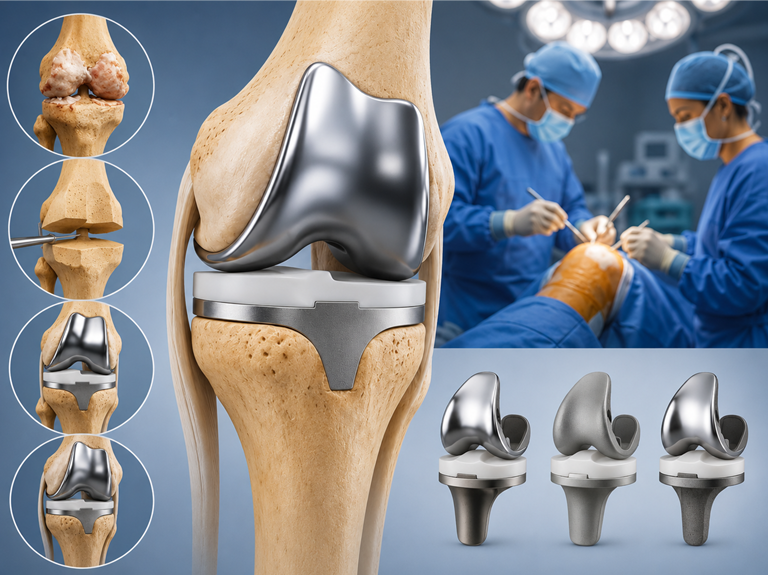
Doctors typically use knee replacement surgery to resurface a damaged knee joint. The process, which is also medically referred to as arthroplasty, is beneficial both for patients with severe knee joint damage due to arthritis and individuals with damaged knee joints due to an injury. Read through the discussion below to know more about the procedure and its risks.
Why Doctors Recommend Knee Replacement Surgery?
This surgical procedure is often the most effective treatment available for knee pain and disability. For most patients undergoing a knee replacement surgery, it’s a treatment for osteoarthritis. Osteoarthritis is a condition that damages the bones and cartilage of the affected joints and makes even normal activities extremely painful. When the knee joint is affected by osteoarthritis, patients often experience mobility issues.
Knee joint degeneration due to rheumatoid arthritis and injury-induced arthritis is also often corrected using knee replacement surgery.
Types of Knee Replacement Surgeries
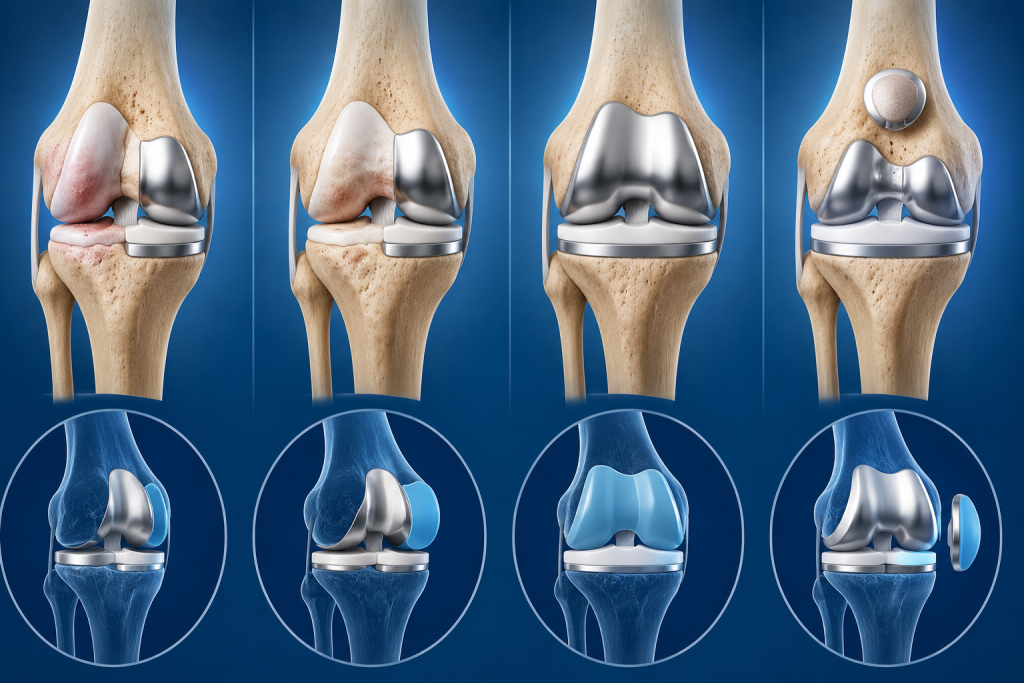
Knee replacement surgery can be primarily of two types. They are:
Total Knee Replacement: During a total knee replacement, the surgeon replaces each of the three primary compartments of the human knee with plastic or metal prosthetic components. The parts replaced during this procedure are the patellofemoral, medial, and lateral compartments of the knee.
Partial Knee Replacement: During a partial knee replacement, the surgeon replaces only one degenerated compartment of the ailing knee. All the healthy ligaments, bones, and cartilage stay intact.
About the Procedure
The basic steps of a knee replacement surgery are as follows:
Step 1: Depending on the patient’s health and a few other factors, the anaesthetist may put the patient to sleep using general anaesthesia or numb the area below his/her waist using an epidural block.
Step 2: Next, the medical team cleans, sterilises, and drapes the knee to keep the surgery site sterile.
Step 3: An incision is made on the front surface of the affected knee to shift the kneecap. The knee joint gets exposed, and the actual surgery begins.
Step 4: This step involves the removal of the damaged cartilage along with some of its underlying bone. The number of cartilages removed depends on the type of knee replacement.
Step 5: The prosthetics of implants are attached either using the press-fit technique or with surgical bone cement. Next, the surgeon inserts a bone spacer made of plastic between the implant’s metal components. This helps the implant to mimic the smooth and gliding movement of the original knee joint.
Step 6: In this step, the surgeon resurfaces the layers underneath the kneecap using a plastic button. It ensures that the kneecap attaches seamlessly with the newly placed metal knee joint.
Step 7: Now that the main steps of the surgery are over, the surgeon will test the operated knee’s range of motion and strength. Once he/she is sure that the results are as desired, he/she will close the incision using staples or sutures.
How Much Time Does It Take to Recover from Knee Replacement Surgery?
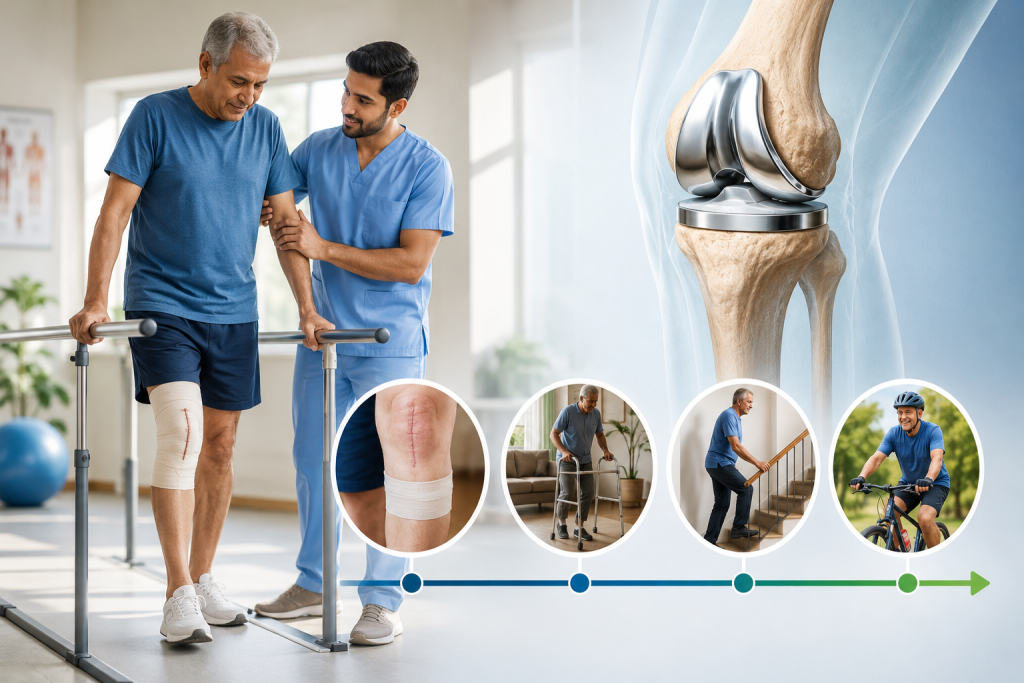
A patient may need six to 12 months to recover from knee replacement surgery. The duration depends on factors like the patient’s age, health status, etc. Throughout the recovery procedure, the patient must undergo physical therapy.
During the first two weeks of the surgery, there may be some swelling and pain around the operated area. Most patients start walking using crutches or a walker around this phase. Additionally, the operated joint becomes strong enough to allow the patient to bend it up to 9 degrees. The staples/sutures are usually removed after 10 days of the surgery.
During the next three to six weeks, the knee joint strengthens further, and the patient’s dependence on assistive devices decreases significantly. First, the patient starts walking using a cane, and soon he/she can walk unassisted. Most individuals undergoing knee replacement surgery get permission to begin their desk jobs and drive within the first six weeks of the surgery.
The surgery site will continue to heal, and the patient will be allowed to get back to normal life within the next 10 to 12 months. Some may experience minor stiffness around the operated area after performing strenuous jobs or during the winter months. These problems can be minimised significantly by doing exercises as advised by the physical therapist.
What Are the Risks Associated with Knee Replacement Surgery?
Like most surgeries, this one can also lead to complications. Common issues patients face after undergoing a knee replacement include:
- Infection
- Blood clotting in the operated leg
- Blood clotting in the lungs
- Bleeding
- Fracture
- Loosening of the implant
- Severe stiffness and pain around the operated area
You should contact a doctor if you notice any of the following:
- Pain and swelling that are getting worse even after two weeks of the surgery
- Fever and chills
- Wobbly knee
- Reduced range of motion
- Grinding or clicking noises coming from the knee joint as you move it
Final Words
If your doctor has advised you to get a knee replacement surgery done, you must go under the knife only after taking a second opinion from a reliable orthopaedic surgeon. The best place to get a second opinion is Reopine.
Visit Reopine to book your appointment for an online consultation. The platform has a panel of highly experienced and qualified orthopaedic surgeons. If needed, Reopine can also help you arrange your surgery with one of the expert surgeons on its panel.